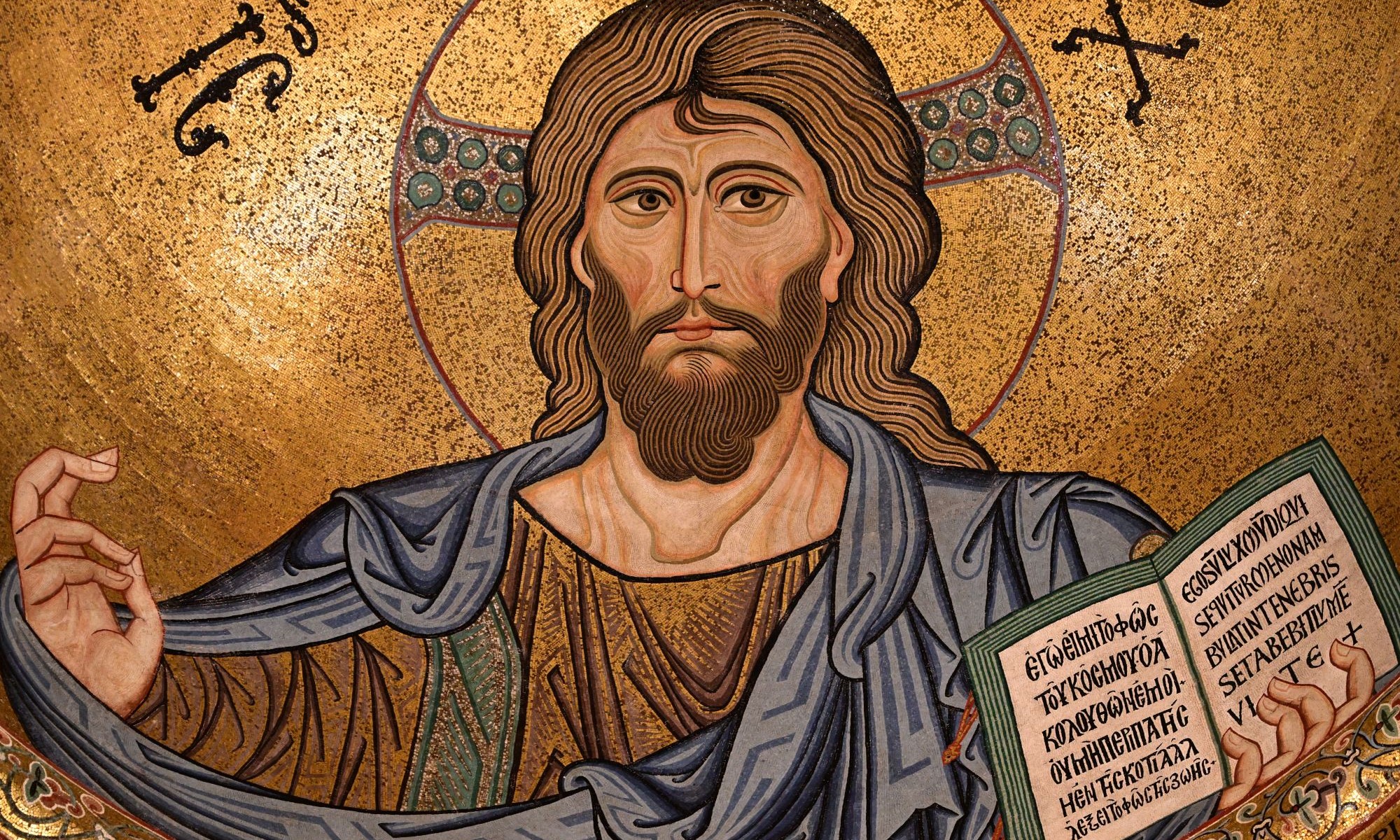
Taking away the weeds within us

7th Sunday after Trinity, Year A. Holy Communion with Baptism. St Mary’s Northolt.

May I speak in the name of Father, Son and Holy Spirit.

Amen

Matthew’s gospel continues with another parable by Jesus themed around wheat and farming.  Again, he is using a common problem that farmers of the time had, to paint a picture of the difference between the world as it is now, and the world to come.

Last week he spoke of how in some cases the devil comes and snatches away the word of God in our heart before it is understood and can bear any fruit – the seed that falls upon rocky ground.

This week he paints a picture of a farmer who does successfully sow an entire field of wheat – who ensures that all the seed falls upon fertile ground and is well nourished and fertilised, so that it will grow well.  This is indeed a good and fruitful church.

But despite this, under the cover of night, the devil comes and sows weeds amongst the wheat, so that even amongst this plentiful and fruitful harvest, there are also people who are unfruitful, who create discord and disharmony, or who work evil.

And the farmer is unable to pull out these evil weeds, for fear of harming and destroying the good wheat.

There are many lessons we can take from this parable.

One is that God accepts the world for what it is.  God so loves us that he is not prepared to destroy the good in order to root out the evil.  The worth of the good is so great that God will not sacrifice them for some putative greater good.  The ends do not justify the means for God.  God’s love for us is so great that he will never abandon us.

I am reminded of two contrasting episodes in the Old Testament that reflect these two ways.  With Noah, God does seem to try to eliminate the evil in the world by allowing the flood waters – the destructiveness of primitive creation that he holds back from us, allowing the flood waters to overwhelm all of the world except for that which is safe in the ark.  But this does not solve the issue, at least not in the long term.

The other is the story of Abraham and Sodom, where Abraham tries to spare Sodom even if only a few good people can be found there – although it turns out in the end that there are no good people there at all.

We discover from these ancient stories a Jewish understanding of the mercifulness of God which Jesus’ parable stands in the tradition of.

God accepts that evil is unfortunately an inevitable part of the world, and that the cost of defeating it head on is too great if it means the destruction of all that is good in creation.  Instead, of course, he takes that cost upon himself, offering himself up to die so that evil may be conquered by his own death and resurrection.

We need to continue to live in this world that evil can thrive in though, and this parable can speak to us today.  If we think of the field as the church, it can show us how we need to conduct ourselves in the world.  Jesus is warning us that no matter how fruitful and good the field may look, evil can and will thrive in there as well.  The safeguarding scandals that the church is coming to terms with are evidence of this – indeed it feels like it is when the field seems especially fruitful that it is easy to let down our guard and not see the weeds that are growing and thriving amongst the wheat. 

Good farming keeps an eye out for weeds hidden deep amongst the wheat, and good safeguarding practice needs to similarly always be looking and examining for signs of bad practice, of abuse of authority and power and position, of the devil at work amongst us.  It seems to be the case that this often is found where things seem at first glance to be most fruitful, that the devil can find these the easiest places to hide.

There is yet another level that this parable can be read at though.  The field is not necessarily the world, or the church, the field can also be us within ourselves.

We are a field that contains both good fruitful wheat, but which also contains many weeds that are sown by the devil.  There is no one who is either perfectly good or perfectly evil – for all of us, the two are blended together in our souls.

And yet despite this, God still loves us for the good, and the potential for good, that is within us.  We are made in the image of God, and we are loved by God for that reason.  God knows that we are fallen and sinful, but he also knows that we are created by Him. And he choses to redeem us for that reason.

We are baptized into God’s family in order to show our loyalty to the covenant that God has made with us – to show our trust in his eternal redeeming love that can and will overcome any evil in our hearts.

This is especially important to those of you who will be standing here today later in this service as godparents to Jasmine.

As part of the declarations you will make, you will renounce the devil and his works, both for yourselves and on behalf of Jasmine.

This is not just an old and outdated form of words.  This is a very real recognition by the church the evil still exists in the world, and within each one of us, and we need to constantly fight against the seductions and temptations of the devil. 

We might not use the simple categories and rules that we once did – we are wiser and humbler now, and we understand better that God’s love is not reducible to simple rules, but God still gives us the knowledge of what is the difference between right and wrong.  God gives us this gift, but it needs nurturing and developing and encouraging, and your job as godparents especially is to help Jasmine develop wisdom to know what God’s path is.

We too as a congregation have a role to play in that – Jasmine is being adopted today into the family of God, and we as this church are the representatives of that great family.  We have a responsibility too towards our newest sister in Christ.  We have a responsibility to walk alongside her, accompany her, guide her and above all to love her as our own sister in Christ.

This is not an easy or light burden that we are given.  The seductions and temptations of the world are many and varied.  None of us are perfect.  Some of us struggle to be good even half the time.  But as the baptised children of God, we are all the adopted children of God, and therefore we all know that we have God as a parent. 

We know that like a good parent, God is merciful and loving, and does not abandon us when we need him most.  God never abandons us, no matter how far we may stray.  God’s love for us is the one eternal truth.  God will never abandon us, any of us.

Jesus gives us a vision here of how, when the time of judgement comes, it is not that there is a clear distinction between good and bad people, who will be saved or damned as appropriate.  Instead this parable tells us that we are all a blend of both good and bad, and he will at that time separate out the weeds of our evil desires from the good and fruitful wheat that also exists within us, and he will burn away the evil that is within us, and only the good will remain.

This is what a merciful God does – he does not discard that which has good in it just because there is also evil, because doing so would also destroy what is good.  Instead, when the harvest time is come and the two can be finally separated, then he will purge the evil from us so that only the good remains.  Then we can enter the Kingdom of God as the people that God always intended us to be.

This is what a merciful and loving God does.  We baptise Jasmine today into that God’s church as a mark of God’s love for her, a love that means that God will never abandon her, but will always walk alongside her and watch over her.

Amen

Fruitfulness

6th Sunday after Trinity, Year A. St Mary’s, Northolt.

The observant amongst you will have noticed that in my sermons so far I haven’t really touched on our New Testament readings, which are from Paul’s Letter to the Romans.

This isn’t because I think Paul’s letter to the Romans isn’t important, although it is true that I do not think it has the priority that some people think it should have in the New Testament canon.

It isn’t that I don’t want to talk about the messages that Paul has in Romans.  I think Paul has some very important messages in Romans.  But they are also very complicated messages that he is sending, not because this is a theological textbook but because he is writing a letter to a church that is in very particular circumstances, a church he did not found or have any relationship with before this letter, and a church that had probably been warned that many of his views were regarded as wrong by the church in Jerusalem.  This is why he is at pains to construct a very complex and subtle argument to defend his views but also to demonstrate his orthodoxy.

For these reasons, I believe that Romans isn’t an epistle that you can just jump into the middle of, or sample verses from out of context.  It needs to be read very carefully in its context, and given the lectionary is almost halfway through it at this point, I feel it is too late to try and contextualise the readings that we are currently getting.  Plus I don’t pretend I understand Romans myself, yet.

The early church context that Paul is part of would have been very in tune with Jesus’ parable of the sower, which Paul and they would have known from oral tradition and stories that were being told and retold about Jesus life and death in their church meetings even though the Gospels as we know them hadn’t been written by this stage.

The early church knew all about different reactions to Jesus’ message of the kingdom.  Jesus himself encountered them even during his ministry.

It seems incredible that people could not want to listen to the message of the kingdom, especially when combined with the miracles and healing that Jesus brought with it.  How could anyone not be uplifted by a vision where everyone is raised up and brought into the presence of God.  Where all are included in the God’s kingdom, rich and poor, inside and outsider, male and female.  Where God’s covenant with Abraham is finally fulfilled – when all the people of the earth are blessed and restored to their rightful place with God.  Where Israel can rest from their labours as God’s priestly race, knowing that in bringing God’s blessing to all the earth, they have achieved the task that God has given them.

And yet…

And yet it is sadly a part of our fallen, sinful, human condition that all too often such a message isn’t one we find uplifting.  Satan all too easily works in our hearts to make us envious and jealous.  We don’t look to our own happiness or wealth as something to be enjoyed as an absolute, but only as something to be compared with that of others.

We are happy because we have more than others, and we are downcast because others have more than we do.  Satan works in our hearts so that we are rocky ground for the seeds of God’s message to fall on. 

We live in a time of extraordinary plenty.  We take for granted so many essential things that generations before us did not know.  We turn on taps and clean, healthy, clear water comes out, rather than having to trek to a deep well to pull up water by hand.  We expect our children to survive childhood – indeed when a child is lost to us it is a matter of devastating anguish, rather than being an expected outcome as it would have been only a hundred and fifty years ago.

And yet, people are more unhappy, more anxious, less satisfied.  Modern communication enables us to see others who we think have more than we do, and modern communication enslaves us into algorithms that prey on our insecurities and our envy and our jealousies, so that that can make more money off us.

The gospel gives us an antidote to this modern culture of materialism, envy and comparison.  The Gospel gives us that absolute truth that is God, and empowers us to see that it is only our relationship with God that has value in this world.  It is only by comparison with that relationship that anything else has any value at all, and the value that it has is in proportion to how it lives out the truth of that relationship.  Our relationships with each other are only valuable in how much they embody our relationship with God.  Our love for each other can only ever be a reflection of our love for God, and that is only ever a place reflection of God’s love for us.

Sometimes this gospel message falls upon stony ground and gains no purchase.  There are now, as there have always been, those who wilfully close their hearts to Christ’s message.  What can we do in such circumstances?  Well, we can pray and we can look to God’s generous mercy.  God is always ready and reaching out to us whenever we are ready to receive him.

Sometimes this gospel message may fall upon shallow earth.  We all know people who have heard Christ’s message and embraced it enthusiastically, but then it lacks nourishment and withers away, and they move on, looking for something else to sustain them.  It is our duty as the church to help nourish these early seedlings; to reach out and welcome those whose faith needs nourishing and help provide that nourishment – help it grow those deep roots.

Sometimes the gospel message does take root, but then the busyness and confusion of modern life can overcome it.  People fall away from the faith because they go to university, or because their job gets to busy, or because looking after a family takes too much energy.  It is hard to find time in the busy schedule of modern life, and while I would never equate attendance at church with faith, being part of a worshipping community does help sustain faith, does keep habits of prayer alive, does give us the spiritual food of the communion table.  We need to help those whose lives are crowded to find what space they can in those lives for God – we need to go and meet them where and when they have that space.

And sometimes the gospel message bears fruit.  We see that in JP who we are sending out today as a gift to the wider church.  We can see fruitfulness in JP here, and I am sure we will see even more fruitfulness in the future.  Jesus talks about thirty-fold, or sixty-fold or even a hundred-fold, but fruitfulness is not a numbers game.  It is about quality, not quantity.  If our fruitfulness is that we have a deeper relationship with God, then we are blessed.  If our fruitfulness is to help just one other person have a deeper and more beautiful relationship with God, then we are doubly blessed. God does not call each one of us to fill stadiums or revival tents – some of us one day might, but he lovingly only calls us to be faithful to Him, to grow deep in our faith with Him, and to heed His call, whatever that might be.

Amen.

The Contradiction of Christianity

5th Sunday after Trinity, 2026. Year A.

May the words of my mouth and the meditations of all our hearts be acceptable in your sight O Lord, our rock and our redeemer.

Amen.

The gospel reading we have just had ends with a saying that I used to find one of Jesus’ most confusing.  I could never understand how a yoke could be easy.  For me, far from the manual agricultural culture that Jesus lived in, a yoke was something you used to impose burdens on people or animals, not something that liberates.  But I realised that actually a yoke is a machine, albeit a basic one.  A yoke allows you to distribute weight more equally, and also to take that weight through your most powerful muscles and joints rather than your weakest.

Jesus isn’t saying that there are no burdens in life.  He isn’t saying that he will remove all of the pain and struggle of life.  Life will always have its pains and struggles.  But Jesus will help us bear those pains and struggles.  He will help strengthen us to bear them with our strengths rather than our weaknesses, and he will help us by bearing our pains alongside us.

In the kingdom, of course, there will be no more pain, but the kingdom is not yet here, even if we have seen its coming in Jesus.  This is part of the Christian paradox – the kingdom has come, but is not yet here.  This might not feel like much of a comfort.  But we know that in Christ we have God who knows our pain and suffers alongside us.  God may be all-powerful, but is also painfully human.

The reading we had from Zechariah is familiar to us of course, even if we have never read it, because it is to fulfil this prophecy that Jesus rides into Jerusalem on a colt on Palm Sunday.  This gives us one of our great visions of the paradoxical contradiction that Jesus is – he enters Jerusalem to a triumphant welcome, and yet riding, not in a chariot or on a proud stallion, but instead on the humblest and poorest of animals – the humble ass – a beast of burden rather than of war.  He enters to a king’s welcome, but not as a king.

We can see this contradiction in the rest of the Gospel passage as well, where he complains about the expectations of his generation, and how fickle the people are.  Fickleness is not just a modern problem…

John and his disciples live a life of ascetic self-denial in the desert – famously dressed in camel hair and living on locusts and honey, and people complain that he is possessed because of it.

John’s role is to prepare people for the coming of the kingdom, and he models this by discarding the distractions and temptations of everyday life, so that he can focus on the signs of the kingdom to come.  He withdraws into the desert, and his followers withdraw with him.  His message rings forth across all of Judea even to Jerusalem, and the people flock to him to repent and be baptized, but he demands that they come to him. 

Jesus, by contrast, although he is no stranger to personal time spent alone or with a few companions, makes no such demand.  Jesus does not need to withdraw from everyday life in order to find the divine – Jesus is the divine come into everyday life.  Jesus goes out amongst the people in order to encounter them where they already are.  Jesus joins them in everyday life – by the well, in the street, and most often by dining with them.  Jesus’ willingness to eat with absolutely everyone was one of the most scandalous things about him in a culture that was obsessed both by status, which was most pointedly expressed in who you ate with and how people were arranged for dinner, and also by purity and cleanliness codes that you needed to stick to in order to be able to come near to God.  Codes that served as a boundary marker, to show clearly who were God’s chosen people, and who were definitely not.  Jesus smashes through these codes, welcoming everyone whether pure or impure, whether poor or rich, whether powerful or marginalised.

Jesus knew how to bring people of all kinds together through communal meals; a tried and tested technique that lives on down to the present day.  For this, he complains, people say he is a glutton and a drunkard.

What people want, of course is a middle way, but this is not what John or Jesus offer.  Both of them demand something from us.  Even though Jesus comes to meet us where we are and as who we are, he still demands something from us – he demands that we recognise that he is also coming to everyone else where they are and as who they are.  Jesus doesn’t just have a personal relationship with us, Jesus has a personal relationship with everyone, even the people we don’t like, the people we despise or hate.

This is the contradiction of Jesus’ love for us – Jesus loves us for who we really are, despite all our failings and sinfulness, but he also loves everyone else, despite their failings and sinfulness, and he calls upon all of us to love each other – not just the each other that are in our community or in this building here today with us, but all the other each others that are out there.  Every person is loved by Jesus, and valued by him as a unique human being.  Every single one.  We may want to group people together into races or faiths or nationalities, but Jesus demands that we recognise that even if we do, everyone in those groups is still a unique individual, each totally and fully loved by God as much as we are, and we must relate to them in this Christlike way.

This is the burden of love that Christ places upon us.

But as Jesus says at the end of our Gospel passage, if we come to Jesus he will teach us how to be gentle and humble in heart.  The burden that Christ places upon us, the burden of love, is a light one once we have come to accept it for what it is.  The yoke is easy, and the burden is light.  Jesus is here to be our guide, and a light before our path.

Amen

Welcome Sermon at St Mary’s

4th Sunday after Trinity 2026, Year A

Well, after that Gospel reading what is there actually to say in a sermon?

Whoever welcomes you welcomes me, says Jesus to the twelve apostles, and while I am not equating myself with any of the apostles, the warm welcome which I, and Petra and Larissa, have received here is indicative of a genuinely Christian community here that does open its arms to welcome everybody, understanding that it is in welcoming everyone that we truly welcome Christ into our lives.

Two weeks ago I was preaching my farewell sermon at Holy Trinity, and the passage was the beginning of this section of Matthew’s Gospel, where Jesus was sending out the apostles having given them authority to act in his name.

Now, having been sent out by Holy Trinity, I am being welcomed here by you.

In between, Jesus has warned his apostles that the road ahead will not be an easy one.

There is a hint of this in our passage.  Jesus says whoever welcomes a prophet will receive a prophet’s reward, and whoever welcomes the righteous will receive the reward of the righteous.

I think Jesus makes it quite clear elsewhere that the rewards of the prophet and the righteous are not in this world, but in the coming kingdom.

The Christian journey is not necessarily an easy one.  Having spent six years of discernment and training, including failing a selection panel and having to reapply a year later, I can say that even the journey that I have taken in order to be here as your curate today has not been an easy one, although I wouldn’t dare to compare it to the struggles that other people have faced.

And the setbacks that I have faced in this journey have been, in retrospect, good setbacks – they have forced me to examine myself, and come to terms with issues that I was ignoring or burying.  It has been a painful but cathartic process.

For those of you who I haven’t talked to about it before, I was brought up in a largely non-religious household, and only really started going to church properly around 20 years ago, prompted by my wife Petra.  In the end I was confirmed twelve years ago, and the confirmation preparation process opened up for me a love of discussing and debating about Christianity that led me to offer myself for discernment as a licenced lay minister.  I trained to be a lay minister from 2016 to 2019, and so was licenced just before Covid hit – I may have had plans for what I was going to do as a lay minister, but that was an early lesson in how as a Christian minister you need to be flexible and adaptive to the needs of the people, rather than needing them to adapt to you.

My experience of training for licenced lay ministry opened me up to the possibility that I might be being called further, into ordained ministry, and I spent several years examining and exploring that vocational calling before offering myself for formal discernment.

And so, after some false starts, I have spent the last two years in further training, and then yesterday, as some of you witnessed, I was ordained as a deacon.

What is a deacon then?  Of the three ranks of ordained ministry, it has the earliest roots, dating back to almost the start of the book of Acts, when the apostles appoint seven people, including Stephen, the first martyr, to wait at the tables in the communal meals of the early Christian community.

And the word in Greek literally means ‘servant’ – and can be used in both meanings – as a servant, or as a title of someone in a leadership position in the church, through the rest of the New Testament.  It is a disappointing reflection of the failings of the Church that there are still Bible translations out there that will translate the male version of the word into English as Deacon, and yet the female version of it as servant, even when it is obvious that the meaning is as a Deacon, i.e. a church leader, for both men and women.  In the final chapter of Romans, when Paul refers to Phoebe as a diaconon, he is saying that she is a Deacon, the leader of the church of Chenchrae, and a benefactor of Paul, not a servant.  Female leadership in the church goes back to the time of St Paul.

So I am now come to you as a servant – I am here amongst you to serve and to learn, from Reverend Julia obviously, but also from all the rest of you here.  Bishop Lusa sent me here to St Mary’s because he felt that it would be a place where I could learn much, and which would help me to be better Christian.  So I stand here in humility before you, and thank you for your welcome, and hope that over the next three years I will be able to serve you well, and that I will learn much from each of you and from this community.

Amen.

Leaving Sermon at Holy Trinity

May I speak in the name of the Father, Son and Holy Ghost.

Amen

It feels very strange to be standing up here, hopefully not for the last time, but certainly at a time of great change for me.

It is hard for me to put in words how grateful I am for everyone here for all the support that you have given me over the years in the journey that has led finally to this next step.

This isn’t my last service here, at the very least I will be back next week, and it has been a joy to assist Reverend Ann in guiding the group of our young people who will be taking the next step in their Christian journey next week, when Bishop Lusa is here to confirm them.  I just didn’t want to upstage the bishop with my farewell or overshadow what should be for those being confirmed their own very special day.

It reminds me that my journey started here with my confirmation only twelve years ago in this church.

And now I am here, stepping off, if not into the unknown, into a new phase of my ministry.

Our Gospel reading is a highly appropriate one for the occasion.

Jesus, having ministered in Galilee, having cure the sick and driven out demons, and proclaimed the coming of the kingdom, having taught and instructed his disciples, and shown them by example what discipleship is, now sends them out with his authority, to proclaim the same message.

Jesus doesn’t hoard his power and authority, but not does he just hand it out to anyone.

He prepares and equips those he has called, before he sends them out.

He makes sure that while he is still present, they are given the chance to gain experience for themselves.

It is a model of how to build an effective team – a model that many businesses today could benefit from learning from.

It has been a long road that I have followed to get to this point, and it is a road that I could not have travelled without support both from God, and my family and friends, and also from all the members of this community.  Support in so many ways – encouragement, example and prayer.

I thank you all from the bottom of my heart for everything you have done to help and support me, and Petra and Larissa, over the years – the way that you have become a family for us.

I will be leaving after next Sunday, but I can assure you that Petra and Larissa will not – I hope that they will be supporting me at St Mary’s at least occasionally, but I fear that the lure of choral worship, and of the many connections that they have here, and the lack of an 8am service at St Mary’s; for Petra at least, rather than Larissa;  will keep them here for at least half of the Sundays in a month, as well as many social events as well.

And while my duty now calls me to honour St Mary’s by devoting my energies to their wellbeing as much as I am able, I also hope to be able to drop in back here occasionally for evensong or social events as well.

I am conscious as I leave that you have, as a community, invested a huge amount of resources in my development as a minister.

It is beautifully Christian that you have done this – that you are gifting me of your own into the wider church.

As Jesus says in our Gospel reading, the harvest is plentiful, but the workers are few.

This is true both of the wider church where fewer and fewer people are offering themselves for ministerial training, either lay or ordained, especially from the more traditional wing of the church.

It is true here at Holy Trinity, where I recognise that my leaving puts more of a burden upon Ann, Ann and Gerry.

I recognise that there are many forms that ministry can take, and many callings, and I recognise that there are many people in this community who have stepped forward into ministry of various sorts.  It is always invidious to name names, but I and I am sure the rest of us are grateful for the way that Julie has stepped forward to re-create our family service, for the work that Simon has been doing for the last few years to enable the ministry that is our holiday club, for all those who minister weekly in our youth groups, and in our welcoming team, and in our refreshments team.  Ministry takes many many forms.

One of my fellow part time, self-supporting ordinands was musing last weekend about whether she might go into full time ministry after her curacy was over, and I felt compelled to interrupt her and correct her that she was already in full time ministry, and would be in full time ministry throughout her curacy.  Ministry doesn’t stop at the church door.  We take ministry into our workplaces and our schools, into the supermarket and the school gate, into the pub and especially into our homes.

We are all ministers here, and although of different types and sorts, there is no hierarchy or rank in ministry, except that Christ stands above all of us.

But, as a church, we flourish when there is a wide diversity of ministry.  A church that was only a welcoming team would be as unbalanced as a church that was only made up of priests.

What I would like to ask you all to do, as my almost parting shot, is ask you all to think and pray on your ministry, and whether God might be calling you to develop your ministry in new paths.

The prospect of entering a formal ministerial role can be a daunting one, and I suspect many of you would feel that you would be inadequate for such a role, or that people like you are not intended to be in such roles.

I can assure you from my years of discernment and training that God calls people of all sorts and types to ministry, and that if you do feel called, this church is as supporting an environment as you could possibly ever ask.

I can say this from personal experience, and for that I thank you from the bottom of my heart.

I pray that you should all experience every blessing in the years ahead.

Amen.

Waiting

Ascension Sunday, 2026. St Alban’s Church, North Harrow.

May the words of my mouth and the meditations of all our hearts be acceptable in your sight O Lord, our rock and our redeemer.

Amen

The period between Ascension and Pentecost must have been a strange and unsettling time for the first disciples.

Their lives have become ones of constant change, and possibly even disappointment.  Notions and expectations that they had held for years are everywhere being subverted and reversed.

The messiah that the prophets and tradition had said would come to sit of the throne of David forever and raise Israel up above the other nations had instead shown his messiahship in a very different way. 

They have been forced to recalibrate their expectations, and completely reorientate their world view.  Suddenly, so much of Jesus’ teaching is reinterpreted and now is more clearly understood in the light of the crucifixion and resurrection. 

That is the glorification that Jesus talks about in the passage from John’s gospel – not the sort of glorification that we are used to from our leaders today, but a completely different sort of glorification.  Jesus’ glorification is in his sacrifice on the cross and his resurrection – his willingness to die for the sins of all the world, and his triumphant resurrection that shows that sin and death have no power against God.  That is true glorification, but it took time and other events to happen for the disciples to understand this.  Change and growth needed to happen.

But even then the change doesn’t stop coming.  If they assumed that Jesus was going to remain with them bodily on earth and help them establish the kingdom of God, then they are again disappointed.  When they ask him when the kingdom will come, his response is that it is not for them to know what the timescale will be. 

God’s plans proceed by God’s will, not our own, and we do not have the wisdom to understand the mind of God.

All Jesus leaves them with is the promise of the Holy Spirit as helper and advocate.

It would be completely understandable if the disciples had balked at this turn of event.  Most people don’t like constant change.  We find it unsettling – we like patterns and certainties.  The past acquires a rosy tint to it, which is often out of all proportion to how good or pleasant the past really was.

We see a lot of this in society at the moment.  The world we are living in is changing at an increasing pace.  Old ways of doing things are no longer valued.  People, places and customs are all changing faster than we feel comfortable with.  The response to this is for many people to want to turn the clock back, or to turn to people who say that there are easy and quick solutions to life’s problems.

Jesus isn’t like that.  He doesn’t offer easy solutions to life’s problems.  He questions us, and invites us to question ourselves as to what we truly want, what truly matters to us.  He warns us that the path is hard, but at the same time he reassures us that he will be there to walk it alongside us, helping us to carry this burden.  He doesn’t deny the complexity, the pain and the brokenness of the world; instead he comes into it to walk alongside us.

The disciples knew all of this, and had walked alongside Jesus through this broken world, knowing that he would fix it, and yet now he is leaving them, and the world is just as broken as when he started, or so it feels.

But the disciples don’t despair.  They don’t turn to charlatans and snake-oil salesmen who will promise them a quick fix.  As Acts says, they remained in Jerusalem, constantly devoting themselves to prayer. 

They had given their allegiance to Jesus, and they kept faith with him.  Some of them had all too recent experience of having broken that faith to remind them that they shouldn’t doubt Jesus.

They are entering into a time of waiting for Jesus’ promises to be fulfilled.  In their case, it was only a ten day wait before Pentecost and the descent of the Holy Spirit, but even after that they are still waiting.  We are all still waiting for the fulfilment of the Kingdom, and as we do so, this world seems to become ever more broken.

Waiting, and keeping faith in the time of waiting is what we do as Christians.

It is what you are doing here at St Alban’s at the moment, as you wait for a new incumbent.  It is hard to keep waiting, not knowing when the end will come.  I know, because we were in a similar place years ago at Holy Trinity, waiting, with no one coming forward to serve.  I know how demoralising it can feel, how abandoned.

But we must have faith with God, that God’s plans will come to fruition in the fullness of time.  It is not for us to know the times and periods that the Father has set by his own authority.

It is for us to keep faith, and to pray, and to be open to the call of God ourselves.  To discern, both as a church, and as individuals, what God is calling us to be – how will we find our fulfilment in God?  Jesus called on his disciples to be witnesses to Him in Jerusalem, in Judea and Samaria, and to the end of the earth.  And all of us here can be witnesses to the risen Christ in everything we do – in how we act in our day to day lives, in how we treat the people we meet in every interaction we have, in how we behave at work, in the decisions we take and the choices we make. 

The church is that innumerable cloud of witnesses – it is a bottom up organisation, not a top down one.  Jesus’ ascension is not an act of abdication, but one of liberation and empowerment. He is enabling his followers to become leaders; to step up into the roles that God has intended them for, and to act as his witnesses in Judea and Samaria and all the world.

The disciples stepped from all walks of life and followed Jesus with faith, not knowing where that path would lead them, but trusting in God’s enduring faithfulness to us, and responding to that faithfulness with their own faith.

We too are called to that path.  We do not know the timing of God’s plans.  Sometimes we are tempted to dry out ‘How long, O Lord, how long’ like the psalmist did, but like the psalmist, we too must trust in God’s faithfulness, and wait with prayer in faith that his will be done, and that the kingdom will come to its fruition through us and our faithful witness.

Amen

God’s everlasting faithfulness

3rd Sunday of Lent, Year A.

One of the aims of the Lectionary, alongside making sure that we cover as much of the bible as possible rather than just always listening to our favourite bits, is to show the links between the Old and New Testaments, to show that Jesus, while being the ultimate divine revelation, is a revelation in the context of the Old Testament history of Israel and God.

Jesus’ incarnation is not something that just happens out of nowhere.  It is something that God has been preparing humanity for, through successive covenants with Noah, Abraham and Moses.

Our Old Testament reading takes place at a liminal point in the story of one of these covenants.  Moses, through the power of God, has freed the Hebrews (and many other foreigners) from a lifetime of slavery in Egypt and led them out into the wilderness of Sinai.  Soon they will reach the holy mountain, and God will unfold to them the details of the covenant that he has already made with them, although they are as yet unaware of it.  He will unfold to them the Torah, the Law of Moses, the commandments that they should keep in faithfulness to the covenant that God has made with them.  But already they are showing that they lack the faith that is necessary for them to live out this covenant.  They are thirsty, and they doubt that God will provide for them.  Moses strikes the rock with his staff, and living water – clean fresh water pours forth from the rock, to quench their thirst.

In our Gospel reading, Jesus is similarly thirsty.  He is in Samaria, and it is midday, the hottest part of the day, when sensible folk find shade and cover from the harsh sun.  Whereas at Sinai, the people of God’s covenant doubted that God would save them from thirst, here Jesus, God incarnate, places his faith in a lone woman at the well to provide him with water to slake his thirst.

The interaction is unusual in several ways. 

Firstly, and most obviously, Jews in those days shunned Samaritans and were shunned in return.  The Samaritans practiced a form of Judaism, but rather than worshipping at the temple in Jerusalem, they had their own temple on Mount Gerizim.  As so often the case, the two peoples, rather than being brough together by the similarity of their religions, were actually driven apart by it.  She is regarded by the Jews as being part of a people that are outside the covenant that God gave to Moses at Sinai.

Secondly, it is not just that she is a Samaritan, but also that she is a woman, and he is a man.  For a man, especially one on his own, to address an unrelated woman, especially one on her own, is crossing a number of deep social taboos.  It is a degree of forwardness and familiarity that would have probably have been quite scandalous.

Thirdly, she is obviously someone of low status, otherwise she wouldn’t be going to fetch water from the well at midday, the hottest part of the day.  If she was able, she would have fetched it early in the morning when it was cooler.  If she had a family, she would probably have sent a child to fetch the water.  But here she is, on her own, unprotected and unaccompanied, having to fetch her own water at the hottest part of the day.

Despite all of this, she responds to Jesus, and he obviously discerns something in her which leads him to reverse the entire interaction.  Rather than asking her for water from the well, he now offers her living water, water of eternal life.

In a parallel with the passage in a few chapters time, where he declares himself the bread of life, which he contrasts with the manna in the desert which sustained, but did not give eternal life, he contrasts the water of the well which is drunk but only quenches thirst for a while, like the water that Moses brought forth from the rock at Sinai, with the water of eternal life that only He can give.

In both cases Jesus makes the explicit contrast.  The old covenants satisfied for a while.  They were gifts of God, but they were never intended to be the final gift of God’s grace.  They were always limited in their scope and effect.  Not that God was punishing or withholding from the people that he gave these covenants to.  The covenants served a purpose.  They are part of the God’s invitation to work with him in the restoration of the fallen world.  This is not an easy task.  It is a task which God needed to prepare people for, to open their hearts.  It is a task which God invited and continues to invite us into, but which ultimately required God himself, in the person of Jesus, to adopt human form, and to suffer and die alongside us, to become like us, so that we might in turn become like Him.

Because what actually links these three passages together isn’t water, living or otherwise. 

What actually links these passages together is grace and faith. 

God’s grace in giving the covenant to the Israelites in the wilderness, and the new covenant of Christ’s blood when he died for us.  Not covenants that we earned or deserved – as Paul says, while we were still weak, ungodly sinners, Christ died for us.  The Israelites were similarly undeserving of God’s grace, as they grumbled their way through the wilderness to Sinai, and even more so when the worshipped the Golden Calf even as Moses received the Law from God.  No, none of us earn or receive God’s salvation by our own efforts, we are all given it through God’s unconditional love and grace. 

Despite the phrasing that so many translations of Paul use, it is not even our faith that achieves our salvation.  Our passages show this – the Israelites have little faith in God or Moses, and yet God has already included them in his Covenant because it is his gracious gift to forgive and redeem us, not something we have to earn.  The Samaritan woman believes in Jesus, even though it seems like she doesn’t really know what she is believing in.

We have been reconciled with God by faith, not our own faith, but through the faithfulness of God in the person of Jesus Christ.  God is eternally faithful to his covenants.

Which is not to say our faith is not important.  Our faith is the proper response to God’s grace, but it is a response, not a condition.  God’s gracious gift is not conditional on our faith.  The bible is full of examples of faith.  Faith found in the strangest places, like the Samaritan woman at the well – part of a long line of women in the bible like Rahab or Ruth who show that faith is found in unexpected places.  Faith that is a response to God’s unconditional gift.

We live in troubled times, and it sometimes feels that despite all our prayers things are getting more and more unsettled.  We see more and more innocent people suffering daily, because of the vanity, greed or fanaticism of their leaders.  We hear the world groaning in pain as climate patterns shift and sea levels rise because of our selfishness and carelessness.

In these circumstances it can be hard to maintain our faith.  These are testing times, the time of trial, the sort of times that we pray in the Lord’s prayer not to be led into.  But as the Israelites discovered in Sinai, being faithful to God requires us to remain faithful during the time of trial, knowing that even if we fail, God’s faithfulness to his promises of salvation always endures.

Amen

Role models

4th Sunday of Advent, 2025. Year A.

The fourth Sunday of Advent is upon us already.  Christmas is only 4 days away.  Hopefully all of you have bought all your Christmas presents for those you love, and also for those you don’t.  

The waiting is almost over, and at the same time, the waiting continues.  

Advent is a time of expectation and preparation for the coming of Jesus.  Not just looking back to his incarnation 2000 years ago, but also to his eschatalogical coming – the final arrival of the kingdom of God for which we are all waiting.

And there have been times over the last year where it has felt like the kingdom of God really can’t come soon enough.

The four Sundays of Lent are traditionally themed – last Sunday we considered John the Baptist, and this Sunday we consider the Virgin Mary.  

But interestingly our lectionary reading for this week focuses as much on Joseph as it does on Mary.  Indeed this is the passage in the bible where we learn the most about Joseph’s character and role.  And it’s really not much to go on.  

What do we learn about Joseph?  He is righteous, at least by the standards of his time.  When he discovers that Mary is already pregnant, and presumably draws the obvious conclusion, he resolves to quietly break their engagement.  

And he is obedient, at least to the angel, when he is told not to take this course of action.

Obedience to God’s will is of course what we most often think of when we think of Mary as well.

Obedience to God’s will is of course something that is admirable, but that obedience shouldn’t necessarily be completely unquestioning, especially if the mediator of God’s will is something less credible than an angel.  

And indeed even angels can be deceivers as well, we should remember.

I would suggest that when we usually read this passage we project a lot of our own cultural preconceptions into this passage when we think about the parallel roles of Mary and Joseph in the incarnation.

For Mary we have a habit, if we are not careful, of overemphasising her meek obedience to the will of God, and transforming that into a normative role for women of being meek and obedient in all that they do – a role that is not conditioned by the Gospel, but by our own cultural prejudices.  

I was reminded of that this week reading the Church Times, and a review of the Channel 4 documentary about the John Smyth abuse.

Part of it was dwelling on the role of his wife, Anne, as both victim and unwilling participant.  

A quote about her described her as “‘the perfect Christian wife’, because she never stood up to him”.  

How do we end up here?

Overemphasising Mary’s obedience, and underemphasising to whom that obedience is directly given runs the risk of us falling into this cultural trap.  

It has to be the foundation of us being a safe church and a Gospel-values-living-out community that obedience should never be given blindly, and trust should always be conditional and accountable.

At the same time as we are taking Mary as an ideal of submissive female obedience, we do not seem to be doing the same for Joseph.  

You will, unfortunately, I think, find few authors holding up Joseph as a model for male qualities because of his submissive obedience to God’s wishes.  

Despite, of course, that in this he is just foreshadowing Jesus’ own submissive obedience and faithfulness to God’s covenant when he meekly goes to his death on the cross 33 years later.

This seems a far cry from the muscular and aggressive Christianity that large parts of the church have spent the last two millenia endorsing, and which once again seems to be raising its ugly head in current events.

We carry a long burden of sin as a church.

But the response to sin is to repent, and change.

If the bishops of the Church of England are being described as ‘weak, woke, weirdos’, then surely the response from anyone who believes in the Gospel is that that is what we should all be boasting in, if we are to model Jesus.

It’s not just about putting Christ back into Christmas; it is about putting Christ back into all of our life.  

Christianity is not about tradition or security or making us feel comfortable and reinforcing our current attitudes.  

Christianity is first and last and everything else in between about Christ as revealed to us in the Gospels.

And everything in the Gospel is about God’s glory that is shown not through strength, but through weakness; not through exclusivity but through inclusivity; not through continuity but through radical change.

Joseph’s role in the Gospel is underappreciated because he is just one of many men in the Gospel, whereas Mary is one of the few women that play a prominent role.  

This is an unfortunate imbalance, and reflects on the cultural traditions of the time that the writers of the new testament were unable to fully break away from, rather than on any eternal principle of how the kingdom of God will be ordered and organised.  

If we complain that the church today is straying from traditional ways, then we need to recognise how culturally dependent that tradition is, and how much Jesus was breaking from the traditions of the 1st century when he preached and enacted the Gospel.

Joseph’s role is also underappreciated because he is not an obvious leader, in the same way that the new testament focuses so heavily on certain key apostles and allows the others to fade into the background.  

It is again cultural conditioning that we focus on people that we perceive as successful, despite the Gospel making it clear that there is no favouritism in the Kingdom to come.  

It is a lesson the modern church often fails to heed, elevating the flashily and outwardly successful over those who offer constant and tireless comfort and ministry, and ignoring that exceptional success is all too often built on shallow, human, foundations, rather than the sure foundation of the Gospel.

It is hard to escape from our cultural conditioning.  

Considering Joseph as Jesus’ father sets us thinking about the language we use of God the Father.  

For many people this can carry a lot of personal or sociological baggage, as our view of God is conditioned by our experience of family relations or patriarchal models of society, especially negatively.  

The problem is that all too often, we are projecting our concept of what a father is onto God, rather than taking the divine model of fatherhood: an all loving, self-effacing, completely sacrificial model of fatherhood, and using that as an expectation that we should aspire our human instances of fatherhood to reach for, even if we can never match.

So this Christmas, as we contemplate the holy family, let us think deeply about how we can model the meekness and obedience of Joseph, the courage and righteousness of Mary, and the self-sacrifice of Jesus, divine majesty humbled into mortal human incarnation.

Amen

God’s work in the world

13th Sunday after Trinity, 2025. Year C.

1 Timothy 1:12-17 and Luke 15:1-10

Our two readings this morning are linked by common themes of sin, redemption and forgiveness.
From Luke we get the first two of three well known parables that Jesus tells in quick succession to the same audience.
The missing one is of course the parable of the prodigal son.
In all of these Jesus is looking at the relationship of the sinner and the righteous.
In yet another, earlier, parable, that of the workers in the vineyard, he introduces us to the uncomfortable idea that those who have come late to faith in God are loved just as much by God as those who were faithful from the start and remained faithful throughout.
In these two parables we have just heard, and the prodigal son, he steps this up a level.
Not only, he tells us, does God love us all equally, but in fact he rejoices more in a sinner who repents and mends his ways than he does in someone who remained faithful from the beginning.
Paul picks up on this theme at the start of his letter to Timothy.
Superficially it can feel at first read like he is boasting of how great a sinner he is, but actually as we read it closely we realise that he is really boasting in the grace of Christ, which he recognises is great enough to be able to overlook the violence and persecution that Paul wrought against the faithful before he became one of the faithful.
But Paul recognised the trap that cheap grace could create – in Romans 6 he poses a rhetorical question as to whether it is a good thing to continue in sin so that Christ’s grace may be shown even more, and vehemently comes out against that argument.
Because of course, God’s forgiveness is only part of the response to our sin.
Even if we are forgiven by God, we have to live with the consequences of our sinful actions, which often include a lack of forgiveness from others, and often from ourselves as well.
Actions always have consequences.
Forgiveness is not unwinding the past. It does not change what has happened.
Indeed even with God’s forgiveness, we can often find ourselves trapped in a cycle of escalation, as our actions beget counter-actions, and all too often we then fall into the trap of feeling required to respond in like manner to these reactions.
This way we end up in a vortex of sin.
This is why John called up those baptised to repent – literally to turn away; to reorient themselves and their lives, away from sin, and towards God.
Forgiveness that is not accompanied by a change in life will not actually change us or benefit us.
We must use the opportunity that God’s unconditional forgiveness gives us to make changes in our lives while we can.
It is easy to feel affronted by these parables – the favouritism that seems to be shown to those who sin and repent offends our natural sense of justice.
And that is to our credit, that we have a natural sense of justice and fairness – that is a God-given gift that we should treasure.
But of course, there is a trap that Jesus sets for us in these parables.
There is no point in us getting excited about those sinning being preferred over us who are righteous, because none of us are righteous.
There are no 99 sheep who never strayed, because we have all sinned and strayed. There are no 9 coins that were never lost.
God rejoices to his maximum over each one of us and our salvation.
There is no hierarchy or grades in God’s love; none of us are closer to or further away from his love; we are all lost sheep, and Jesus has found all of us.

Amen

This is the mistake that the Essenes and the Pharisees could be accused of, to think that there is a route to righteousness through human action, whereas Jesus shows us that, all along, the only route to salvation that we can actually use is through Jesus himself.
For Adam, salvation was possible through right-living, but the expulsion from Eden was the loss of that easy route.
Now the only route left is the hard route – hard for us, even harder for God.
We live in a broken and fallen world, and everything we do is set in that context.

In my training, especially when part time students are gathered together, a common question is ‘what do you do for a living when you are not doing this’.
When I tell people I work for a company that produces software for online gambling, there can often be an eyebrow raised, or sometimes worse.
And I completely understand that.

I sometimes raise an eyebrow at my colleagues myself.
There are times when I doubt what I do.

One of the reasons why I was rejected by the first ordination selection panel that I attended was that I started to doubt my own calling when surrounded by other potential ordinands who seemed to be youth workers and pastoral assistants and or worked in church charities.
I sabotaged myself because I doubted myself and my calling.
And recovering from that experience was one of those times when I have felt God, at length, speaking to me clearly.
Because I believe that part of my calling is to be out there in the world, not just visiting but being in a secular workplace.
I just needed to be more confident in that calling.
I do not in any way doubt the wonderful work that all those other ordinands do in any way.
They were all wonderfully spirit-filled people who seemed passionate about wanting to follow God’s calling.
I sincerely hope that all of them were selected, and go on to serve God in a myriad of wonderful ways.
But if the only thing we do to serve God is to work within the church, or in church outreach to the disadvantaged, then who is going to bring the kingdom of God into our work places and into all those other places where people who don’t come to us,
people who don’t know about us,
people who may not even realise the need for God that they have; who is going to go and meet those people?
Who is going to model the kingdom of God for them, not just in what they say, but in what they do, how they act, who they are?
Who will show them what the kingdom can be in practice?
None of us here cease to be a Christian when we walk out of that door at the end of the service.
And I believe that while as Holy Trinity, we do already do a lot to remind ourselves of our witness in the world;
we need to do even more to constantly celebrate all of us who may not necessarily even realise what evangelists we are in everything we do beyond these four walls, everywhere that we are.

Jesus in his parable doesn’t say ‘who on losing one sheep doesn’t wait for it to return’.
He says’ who, on losing one sheep, does not go after it until he finds it’.
We are both shepherds and lost sheep, and in both cases, we are found out in the wilderness, not in the fold.

Amen.

Freedom and family

12th Sunday after Trinity, 2025. Year C.

Philemon 10,12-17; Luke 14:25-33

Abandon your family and give up all that you have. This is what Jesus tells us we must do in order to follow him.

The NSRV uses even stronger language – you must hate your family and give up all your possessions.
Strong words for us in Northwood today – many of us have many possessions that we would need to give up.
Strong words for the crowds that Jesus is talking to on the road to Jerusalem. They had fewer possessions that we do now, but for them family was the anchor of their entire existence.
Your family was your social circle. Your family was your financial security if things went wrong. They would stand up for you and testify on your behalf if you were accused in court. Land, the primary source of wealth for most people wasn’t held individually, but but families and clans.
In our atomised and individualistic secular western world of here and now, it is probably hard for most of us to imagine how strong those familial ties were.
Yet Jesus seems to be asking those who would follow him to give up all of this – all ties to the world, in order to follow him.
Those of you who were here last week and heard me preach then might be thinking that in my analysis of John the Baptist’s way of withdrawing from the world, and Jesus’ way of engaging with the world, I got it wrong – that even Jesus is now advocating withdrawing from the world.
Our epistle reading, from the very unusual letter of Paul to Philemon, seems to show that even his early followers didn’t necessarily read it this way.
The letter to Philemon can be very challenging to our modern sensibilities, and shows how much progress we have made in two thousand years, on the subject of slavery at least.
Paul disappoints many of us I think in this letter in the way that he accepts that Onesimus is a slave, and returns him to his master. This is the same Paul who in Galatians says that in Christ there is neither slave or free, and we might feel that this logic would extend to wanting to abolish the status of slavery entirely.
Instead we get a practical outworking of his message in Galatians.
He invites Philemon to receive Onesimus back, not as a runaway slave, but as a brother in Christ. He asks Philemon to see that in Christ neither of them is a slave, but also, of course, neither of them are free in the traditional sense either, because both of them belong to Christ.
To misquote Orwell, enslaving oneself to God is true freedom.

And this is what Jesus is demanding of those who follow him. They must break out of their existing social network, which both sustains and constrains them. That network brings them a measure of freedom, but it also enslaves them to its needs.
What it does not do is provide them with the support and resources that they will need if they are to truly follow Jesus.
The two parables he tells in quick succession illustrate this.
Both of them illustrate situations where people embark on a project with insufficient resources to complete, and in both cases the end result, easily predicted at the outset, are disastrous.
Jesus is warning us that following him is not something to be undertaken lightly or trivially. We must have sufficient resources to complete the undertaking that we are embarking upon.
Jesus, I think, is not asking us to start this by making ourselves less prepared though.
What he is highlighting is that we need to cast off things that might hold us back, or prevent us from properly following him.
Family in Jesus’ time was a support network, but it was also a place of hierarchy, control and authority. We may or may not have a different experience of family today, but in his time, the family controlled your life. To truly follow God, you needed to free yourself from that control.
Possessions are another thing that can keep us from God. In the case of Philemon, his possession of Onesimus is certainly something that is preventing him from properly following Jesus. But, like the One Ring, he must give up that possession voluntarily in order to truly benefit.
But this does not mean that we are separating ourselves from the world. Jesus’ language may be stronger than we expect, but that is because in those days the ties that bound people were stronger. You couldn’t be ambivalent about your family, or be semi-detached from it – you were either part of it, and submitted to the authority of the family patriarch, or you were not part of it.
Jesus is on the road to Jerusalem, and his death on the cross. People who wanted to follow him on that road, would need to give up everything, including their own lives.
Jesus is talking about his here and now in what he says here.
In the description of the early church that we get in Acts, we see how his followers fulfilled that vision in the light of not just the crucifixion, but also the resurrection.
They may have left their families, but they had formed a new family, the church. A much more equal family. Again, we may look at it and see the leaders and followers, the hierarchy, and the divisions between Jews and Greeks. But for its time, it was a place of radical equality and inclusion and freedom. We still have the church today, as a family that everyone here, and many many others all belong to. A family that supports, cares and loves all its members. A family that we seek to make a safe place for everyone, which is why we have safeguarding policies and procedures and training. That is not bureaucracy – it is living out God’s vision for the church.
The early church members sold everything, and held all their possessions in common. We no longer hold all our possessions in common, but we do hold this church building in common, between all of us in this community, as a place where we can meet with each other and with God.
That is why we ask the members of the congregation to contribute according to their talents, in both money and time and skills, to help maintain and improve this place, that it might be a beacon of God’s presence in the world – a physical sign of the kingdom that is to come. That is why we contribute as a parish to the work of the diocese according to our talents, so that other places may also be beacons of God’s kingdom in the world.
If we seek to follow Jesus, and I hope all of us here present seek to follow him in some way, then we need to be prepared for the journey ahead, because it will not be a straightforward road, and it will take us to places that we never expected to go, and lead us to experiences that we never expected to encounter.
Our existing resources will never be adequate for this, and it is not a journey that we can undertake on our own.
Instead, we must learn not to rely on our own strength, our own resources, our own networks.
We must place our trust in the Spirit, in God’s love for us, and in each other.
Amen.